Atlia guide
Little Italy Airbnb Management: What a Local Manager Does
What a full-service manager handles for a Little Italy rental, what stays with you, and how to check your planning area and building rules before you list.
A full-service manager for a Little Italy rental runs the work that repeats every stay: guest messages, nightly pricing, turnovers and cleaning, maintenance coordination and owner reporting. You keep the decisions that are yours: the license, the building's rules, and the approvals on spending. Atlia is a full-service short-term rental management company that does this work for a flat 10% fee, with repairs and supplies passed through at cost.
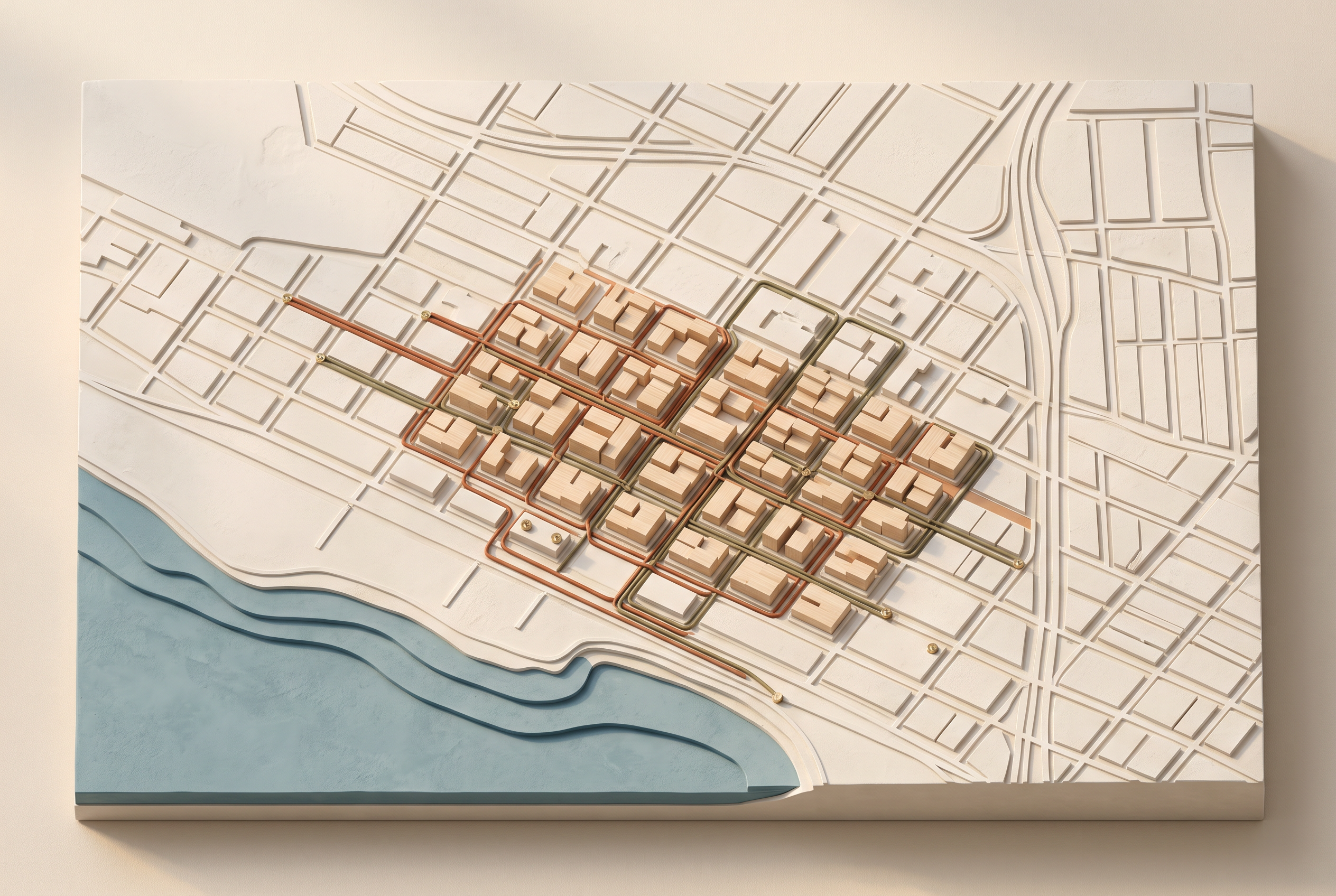
Little Italy sits within San Diego's Downtown Community Plan area, near the North Embarcadero waterfront, and its main commercial corridor is India Street. The Saturday Little Italy Mercato draws a steady crowd to the neighborhood. What affects your rental legally comes from two places: the city's Community Planning Area map and your building's own documents. This guide covers both, then the recurring work you can hand over.
What a Little Italy owner hands to a full-service manager, and what stays with you
You hand over the work that repeats with every booking, and you keep the choices only an owner can make. With Atlia, the handed-over list is guest communication, dynamic pricing, turnover and cleaning coordination, maintenance coordination, and owner reporting.
What stays with you is short. The license is yours to hold and keep in good standing. Whether to list at all depends on your building's rules. Spending approvals stay with you too: the manager brings you the decision, you say yes or no. That split is the whole point of full-service management. You aren't removed from the property. You're removed from the daily queue.
If you're comparing this with a Downtown condo, the neighbor page covers the same split in more detail: Downtown San Diego Airbnb Management: What a Manager Does. If you're weighing a manager against a co-host arrangement, see Airbnb Co-Host vs Property Manager in San Diego.
Guest communication and dynamic pricing: who answers and who sets the rate
With a full-service manager, the manager's team answers guests and the manager sets the nightly rate. Both jobs run every day of the year, which is why owners hand them over first.
Guest communication means pre-booking questions, check-in details, mid-stay problems and checkout. The guest gets an answer from the manager's team, not from you at dinner. Dynamic pricing means the nightly rate moves with demand instead of sitting at one number you set in a spreadsheet and forgot. You see the results in your owner reporting rather than touching the calendar yourself.
For a closer look at each job, see Airbnb Guest Communication in San Diego: Who Answers and Dynamic Pricing for San Diego Airbnbs: An Owner's Guide.
Turnovers, cleaning and maintenance coordination, with approvals
Turnovers are the most regular hands-on job a rental has, and Atlia coordinates them: the cleaning and the reset between stays, so the next guest arrives to a ready unit. Maintenance works the same way. When something needs attention, Atlia coordinates it and brings you the approval.
That approval step matters. Repairs and supplies are passed through at cost, so what you approve is what the work cost, not a figure with a markup folded in. You decide on the spend. The manager handles the coordination around it.
The detail behind each of these is in Airbnb Turnovers in San Diego: What Happens Between Stays and Airbnb Repairs in San Diego: Who Approves What.
The one-hour local contact: what the city requires and what Atlia's staffed San Diego base covers
San Diego's short-term rental rules call for a local contact who can respond to a reported complaint, in person or by phone, within one hour, and take action to address it. The word is respond. The requirement is a response inside the hour plus action, not a fix inside the hour.
Atlia's staffed San Diego base covers the local-contact role. It responds in person or by phone inside the city's one-hour window, and that coverage is included in the management rate. The designation itself is the host's to make: you name who your local contact is. If you self-manage, that person is usually you, which means your phone has to be answered and someone has to be able to reach the property.
Licensing: confirm your planning area on the city's Community Planning Area map (as of November 2026)
Confirm your planning area on the city's Community Planning Area map, because San Diego assigns license treatment by planning area, not by neighborhood name. Open the map, check the property's address, and treat the map as the answer. Our guide to how San Diego's planning-area tier rule works explains what each result means, and the city's Short-Term Residential Occupancy page carries the current terms. A license is non-transferable.
Condo and HOA rules: read them before you list
If your Little Italy home is a condo or townhome, the building or HOA can restrict short-term rentals whatever the city allows. A city license doesn't override your governing documents.
Read the CC&Rs, the bylaws and any recent board rules before you list. Look for minimum-stay terms, rental caps, registration requirements with the association, and any rule on guest access. If the documents are unclear, ask the HOA in writing and keep the reply. Doing this first costs an afternoon. Discovering a ban after you've furnished the unit and taken bookings costs far more.
Once you know the building allows it, a manager can work within the building's rules day to day, but the reading is yours to do. Our San Diego condo and HOA guide walks through it.
Atlia's flat 10% fee, repairs and supplies at cost, and what owner reporting shows
Atlia charges a flat 10% management fee, with repairs and supplies passed through at cost. The fee covers the management work described above: guest communication, dynamic pricing, turnover and cleaning coordination, maintenance coordination, owner reporting, and the staffed San Diego base covering the local-contact role.
| What | How it works |
|---|---|
| Management fee | Flat 10% |
| Repairs | Passed through at cost, with your approval |
| Supplies | Passed through at cost |
| Local-contact coverage | Included in the management rate |
Owner reporting is how you stay informed without doing the daily work. You see what happened and what's waiting on your approval. For how to read the numbers, see Reading Your Airbnb Owner Statement in San Diego. For the platform side of the ledger, see Airbnb Host Fees in San Diego: Split vs Single Fee.
How to judge a manager before you sign
Judge a manager by what they'll put in writing and who they put on the phone. Ask five questions:
What is the fee, as a single number, and what does it cover?
How are repairs and supplies billed: at cost, or with a markup?
Who is the local contact, and can they respond in person or by phone within one hour?
What do I approve, and what happens without my sign-off?
What will I see in owner reporting, and what do I have to do myself?
A manager who answers these plainly is worth a conversation. One who answers with adjectives isn't. Atlia's answers are above: a flat 10%, repairs and supplies at cost, a staffed San Diego base covering the local-contact role, and approvals that stay with you.
Check your map and your building, then ask Atlia for the scope
The sequence is simple. Confirm your planning area on the city's Community Planning Area map, read your building's rules, then hand over the recurring work. The map is what settles it for your address. Once those two checks are done, Atlia takes guest messages, pricing, turnovers, maintenance coordination and reporting for a flat 10%, with repairs and supplies at cost. Contact Atlia and ask for the scope in writing for your Little Italy unit.
Frequently asked questions
Questions owners ask
How much does it cost to pay someone to manage an Airbnb?
Atlia charges a flat 10% management fee, with repairs and supplies passed through at cost. The fee covers guest communication, dynamic pricing, turnover and cleaning coordination, maintenance coordination and owner reporting. When you compare managers, ask whether repairs and supplies carry a markup and what the single fee actually includes.
How much does Airbnb take from hosts and guests?
Per Airbnb's help page as of November 2026, on the split fee most hosts pay 3% and guests pay 14.1% to 16.5%. On the single fee most hosts pay 15.5%. Airbnb says it is moving every home host to the single fee. These are platform fees, separate from any management fee.
Is Little Italy treated differently for a San Diego short-term rental license?
San Diego assigns whole-home license treatment by Community Planning Area. Tier 4 applies in the Mission Beach planning area and Tier 3 in any other. Little Italy sits within the Downtown Community Plan area, so confirm your address on the city's Community Planning Area map rather than assuming from the neighborhood name.
Who is the local contact for my San Diego rental?
The designation is yours to make. San Diego requires a local contact who can respond to a reported complaint in person or by phone within one hour and take action. Atlia's staffed San Diego base covers that role and responds inside the one-hour window, included in the management rate.
Can my condo or HOA stop me from listing on Airbnb?
Yes. A building or HOA can restrict short-term rentals regardless of what the city allows. Read your CC&Rs, bylaws and recent board rules before you list, and ask the association in writing if anything is unclear.
Sources
- https://atlia.revnu.sh/downtown-san-diego-airbnb-management-what-a-manager-does
- https://atlia.revnu.sh/mission-hills-airbnb-management-what-a-local-manager-does
- https://www.atlia.com/
- https://www.sandiego.gov/sites/default/files/downtown-comunity-plan-all-1.pdf
- https://www.sandiego.gov/sites/default/files/2025-07/stro-host-operating-requirements.pdf
- https://www.atlia.com/blog/downtown-san-diego-airbnb-management-what-a-manager-does/
- https://www.sandiego.gov/treasurer/short-term-residential-occupancy
- https://docs.sandiego.gov/municode/MuniCodeChapter05/Ch05Art10Division01.pdf