Atlia guide
Mission Beach Short-Term Rental Licenses: Tier 4 Cap Is Full
The Mission Beach Tier 4 cap is full: 1,099 licenses issued and none remaining as of July 2026. What that means for buyers, and for owners who already…
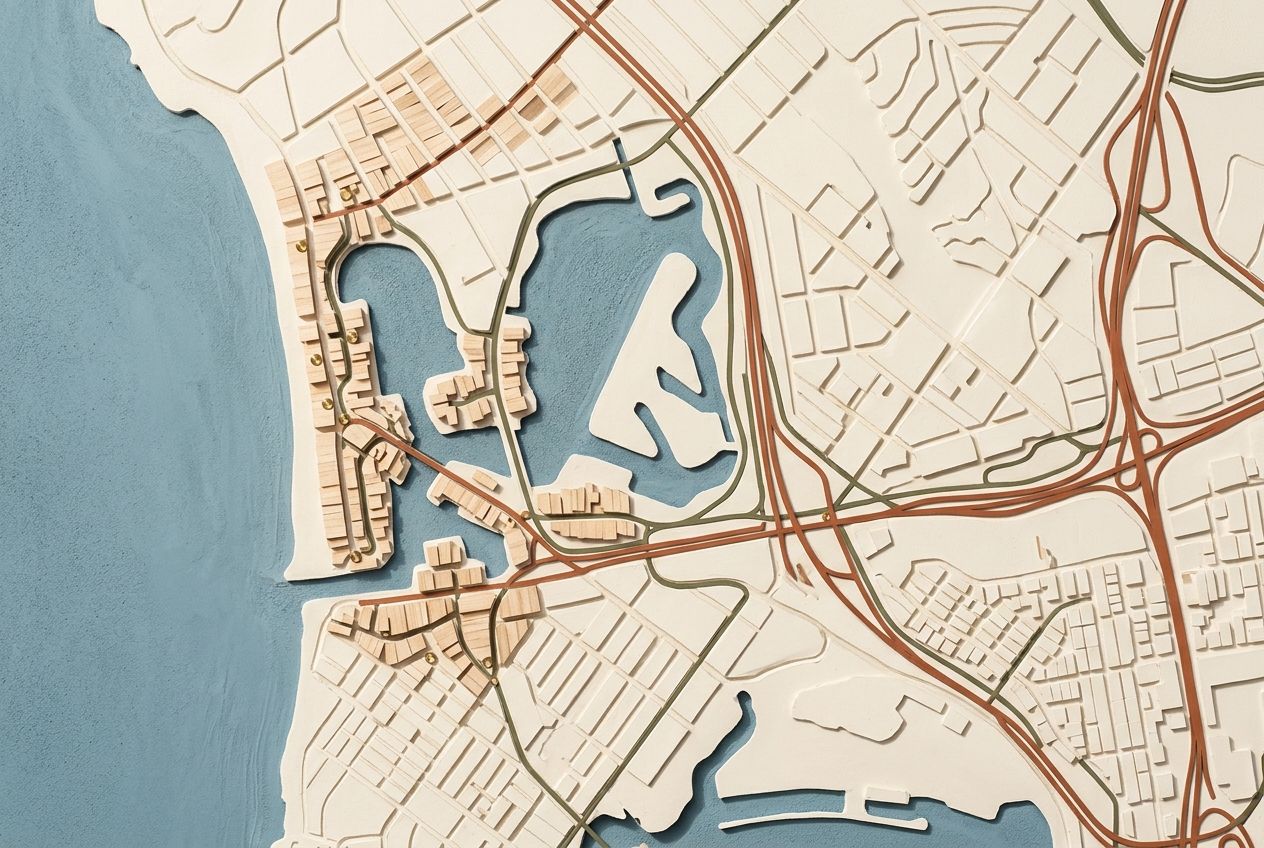
Property owners walking along Ocean Front Walk or Bayside Lane see the same "For Sale" signs promising high-yield vacation rental potential. For years, Mission Beach operated as the unofficial capital of San Diego tourism, where whole-home rentals were the default rather than the exception. That era of open entry ended with the Short-Term Residential Occupancy (STRO) ordinance.
The city caps the number of whole-home rental licenses allowed in the Mission Beach community planning area, and that cap is full. As of July 31, 2026 the city had issued 1,099 Tier 4 licenses with none remaining. If you are looking to secure a Mission Beach short term rental license today, there is no license to issue. Two facts drive everything that follows: the cap is reached, and a license is issued to the host rather than to the property, so it does not transfer with a sale.
What the Tier 4 License Is and Why Mission Beach Is Different
The San Diego STRO ordinance uses four tiers, and Mission Beach is the only area with its own dedicated category. Tier 4 covers whole-home rentals inside the Mission Beach community planning area; Tier 3 covers whole-home rentals everywhere else in the city. The two are capped on different bases, which is the whole reason Mission Beach behaves differently from the rest of San Diego.
A Tier 4 license covers whole-home rental, and it comes with obligations: at least 90 days of licensed use a year, a two-consecutive-night minimum per guest, and quarterly reports to the city. A pattern of 21 to 89 days a year is not permitted. That is different from Tier 2, where the unit must be the host's permanent residence and the host lives there at least 275 days a year. Tier 4 is capped at 30 percent of the Mission Beach community planning area.
The contrast with the rest of the city is stark. Tier 3, covering whole-home rentals outside Mission Beach, is capped at 1 percent of housing units. Mission Beach gets 30 percent. A far more generous allowance, and it is still the one that is full: as of July 31, 2026 the city had issued 4,832 Tier 3 licenses with 829 still available.
The Cap in Numbers: 1,099 Issued, Zero Remaining
The number is not approximate. As of July 31, 2026 the City Treasurer's figures show 1,099 Tier 4 licenses issued and zero remaining. For comparison the same figures show 135 Tier 1, 2,372 Tier 2, and 4,832 Tier 3 with 829 left. Mission Beach is the only one of the four that is out.
So paying the fee does not get you a license, because there is no license to issue. What that does to the market is subtler than it first looks. A property does not carry a license, so a listing that is operating today tells you what the current owner holds, not what you would hold after buying it.
Ask the City Treasurer directly what is on file against an address before you make an offer, rather than relying on the seller's description of it. A license is held by a host, one license per host and one dwelling unit at a time, and it is not transferable. If a property is running as a short-term rental today, that is the seller's license, not the property's.
What Happens Now the Cap Is Reached
Licensing became mandatory on May 1, 2023. The honest answer about what happens next is that we cannot tell you. How the city handles applications against a full Tier 4 cap, whether a queue exists, how it is ordered, and how fast anything moves are questions for the City Treasurer rather than for a blog. Anyone quoting you a position number or a waiting time is guessing.
What can be said from the published figures is that licenses run for two years, so the pool does turn over on a cycle, and that a license can also end through the ordinance's revocation route. Neither of those tells you your odds.
If a Tier 4 license is central to a purchase you are considering, put the question to the City Treasurer in writing before you commit, and treat any timeline you are given by a seller or an agent as unverified until the city confirms it.
Why Buying a Mission Beach STR Property Doesn't Transfer the License
One of the most common misconceptions in San Diego real estate is that a short-term rental license "runs with the land." In some jurisdictions a permit attaches to the address. In San Diego it does not: STRO licenses are non-transferable, and are held one per host for one dwelling unit at a time.
If you buy a beachfront condo in Mission Beach that the seller has been renting nightly, the seller's license does not come with it. They cannot assign it to you. You would need a license in your own name, and with the Tier 4 cap full there is none available to issue.
That is the trap in a seller's pro forma. Those figures rest on a license the buyer will not inherit, so the income they show is not income you can plan on. Work out what the property is worth to you as a long-term rental or a second home, and read our San Diego STRO permit requirements checklist before assuming anything can stay on Airbnb. In Mission Beach today, a whole-home short-term rental is not what a new buyer is buying.
What You Can Still Do Legally: Tier 1, Tier 2, and Long-Term Rental
If you own a property in Mission Beach but do not have a Tier 4 license, you are not completely out of options. You simply cannot operate a whole-home rental for more than 20 days per year. The first alternative is a Tier 1 license. This allows you to rent out your entire home for a total of 20 days or fewer in a calendar year. This works for owners who live in their homes but want to rent them out during high-demand weeks like the Fourth of July or Comic-Con.
The second option is Tier 2, which covers home sharing. The unit must be your permanent residence and you must live there at least 275 days a year. Tier 2 is not limited to renting a room while you are home: whole-home rental is allowed under it for up to 90 days a year. For most investors that is not a viable path, but for a local owner it is a legal way to generate income.
The third path is the long-term rental market. The licensing trigger is renting for less than one month, and the city measures that by calendar month rather than by counting nights, so January 31 to February 28 is a month and February 1 to February 28 is not. Get that boundary right before assuming a let falls outside the ordinance. Mission Beach has a steady market for monthly winter rentals; the nightly rate is lower and so is the operating load. Our San Diego short term rental property management overview covers the distinctions.
What to Do If You Already Hold a Tier 4 License
If you are one of the 1,099 owners who secured a Mission Beach short term rental license, your primary goal is protection. The city is aggressive about enforcement, and losing your license is effectively permanent because of the waitlist. One of the most common ways owners lose their permits is through noise complaints and failure to follow the San Diego STRO local contact requirements.
You must have a named local contact who responds to a reported complaint in person or by phone within one hour and takes action. Responding inside the hour without stopping the nuisance is a separate reportable violation. The city does not publish a flat fine for a host operating requirement violation. What the ordinance does provide is a revocation route: a third alleged violation at the same unit, or by the same host, within 12 months can go to a hearing officer who may revoke the license. Atlia staffs that contact role with local operators.
Both your STRO license number and your Transient Occupancy Tax certificate number must appear on every advertisement for the property, and both must also be on the exterior notice, visible from the sidewalk, alongside the host or local contact details. Owners routinely display the license number and forget the TOT certificate number. Guests must also be given the city's Good Neighbor Policy, a human trafficking awareness notice must be posted inside, and the host must hold proof of a trafficking awareness course.
The Bottom Line for Mission Beach Owners and Buyers
The Mission Beach market has entered a period of regulatory stasis. Speculative buying followed by an immediate Airbnb listing is no longer possible. For buyers, this means valuing properties based on their long-term rental yield or their utility as a personal residence. If a seller claims a property is a "licensed STR," remember that the license dies with the sale. You are buying a house, not a permit.
For existing owners the position is unusual: the city is not currently issuing more Tier 4 licenses, and yours cannot be sold on or passed to a buyer, so it is not something you can realize value from on the way out. What it does do is let you keep operating. That makes margin the only place growth can come from, so it is worth knowing exactly what your current manager charges and what that fee covers. Ask for the current rate in writing rather than working from a range you read somewhere.
Atlia charges a flat 10 percent of booking revenue for full-service management, covering guest communication, pricing, turnovers, maintenance coordination and the filings. The window to get a new Tier 4 license is closed. The one to run the property you already have well is not.
Conclusion
A full Tier 4 cap changes what a Mission Beach purchase actually buys, and it raises the cost of losing a license you already hold. If you are one of the 1,099 holders, compliance is the thing protecting that position, and the one-hour contact obligation is where it is most often lost. Atlia covers that role with local operators, at a flat 10 percent of booking revenue. Get in touch if you want to talk it through. None of this is legal advice, and the City Treasurer's STRO page is the authority on your own obligations.
Frequently asked questions
Questions owners ask
Can I buy a Tier 4 license from another owner in Mission Beach?
No. San Diego STRO licenses are not transferable, and are held one per host for one dwelling unit at a time. When a property changes hands the seller's license does not come with it, and because the Tier 4 cap is full there is no new license available to issue to the buyer.
How many Mission Beach Tier 4 licenses are left?
None. As of July 31, 2026 the City Treasurer's figures show 1,099 Tier 4 licenses issued and zero remaining. Tier 4 is capped at 30 percent of the Mission Beach community planning area. For contrast, Tier 3, which covers whole-home rentals everywhere else in the city, had 4,832 issued with 829 still available.
Does a Tier 3 license work for a property in Mission Beach?
No. Tier 3 covers whole-home rentals located outside the Mission Beach community planning area. A whole-home rental inside Mission Beach needs a Tier 4 license, which is the tier that is currently full.
What are my options in Mission Beach without a Tier 4 license?
Three. Tier 1 allows an aggregate of 20 days or less a year with no onsite requirement. Tier 2 requires the unit to be your permanent residence with you living there at least 275 days a year, and allows whole-home rental up to 90 days a year. Or you let it long term: the licensing trigger is renting for less than one month, measured by calendar month rather than by counting nights.
What does holding a Tier 4 license actually oblige me to do?
At least 90 days of licensed use a year, a two-consecutive-night minimum per guest, and quarterly reports. You need a named local contact who responds to a reported complaint in person or by phone within one hour and takes action. Both your license number and your TOT certificate number go on the exterior notice and on every advertisement, and records of guest dates, nights booked and gross receipts are kept four years.